


Jumping jacks are one of those exercises almost everyone recognizes. You probably did them in gym class, during a sports warm-up, or as part of a home workout. They look simple, require no equipment, and can be performed almost anywhere.
But simple does not necessarily mean easy.
Do jumping jacks continuously for a few minutes and your breathing gets heavier, your heart rate climbs, and your legs quickly remind you that this childhood exercise is legitimate cardio.
That leads to an obvious question: how many calories do jumping jacks burn?
There is no single number that applies to everyone. Your body weight, pace, workout duration, movement intensity, fitness level, and even how efficiently you perform the exercise can affect energy expenditure.
Still, it is possible to make reasonable estimates. Whether you are doing 100 jumping jacks as a quick exercise break or aiming for 500 or 1,000 throughout a longer workout, understanding the numbers can help put the exercise into perspective.
How Many Calories Do Jumping Jacks Burn?
For many people, vigorous jumping jacks may burn roughly 8 to 16 calories per minute, although actual calorie expenditure can fall outside that range.
A lighter person performing jumping jacks at a comfortable pace will generally burn fewer calories than a heavier person performing them vigorously.
Consider two people doing exactly the same exercise for five minutes. If one weighs considerably more, moving that additional body mass generally requires more energy. If the second person also performs the movement faster and more explosively, the difference may become even greater.
This is why online claims such as “100 jumping jacks burn exactly 20 calories” should be treated cautiously.
Calorie estimates are useful, but they are estimates.
The broader principle matters more: jumping jacks are a dynamic full-body exercise capable of raising your heart rate quickly. That makes them useful for adding activity without requiring a treadmill, stationary bike, or large workout space.
They also fit naturally into the concept of exercise snacking for busy people, where short periods of physical activity are spread throughout the day instead of relying entirely on one long workout.
How Many Calories Do 100 Jumping Jacks Burn?
A reasonable estimate for 100 jumping jacks is approximately 15 to 25 calories for many adults.
That range can vary considerably.
If you complete around 25 jumping jacks per minute, 100 repetitions would take approximately four minutes. Someone moving faster might finish them in closer to two or three minutes.
The number of calories burned during those 100 repetitions will depend partly on how long you are actually moving and how demanding the effort is for your body.
Someone who weighs 125 pounds may burn less than someone who weighs 200 pounds while completing a similar number of repetitions at comparable intensity.
There is another factor that tends to get overlooked: technique.
A half-hearted jumping jack with a narrow jump and relaxed arm movement is not quite the same workload as a controlled, energetic repetition where the legs move through a wider range and the arms travel fully overhead.
Personally, I think counting repetitions is useful for motivation, but time is often a better way to judge a cardio session. “I did 100 jumping jacks” sounds precise, yet two people could complete those 100 reps with very different levels of effort.
How Many Calories Do 500 Jumping Jacks Burn?
Five hundred jumping jacks could burn approximately 75 to 125 calories for many people.
Again, this should be viewed as a general range rather than a guaranteed result.
At 25 jumping jacks per minute, 500 repetitions would require about 20 minutes of actual movement. At a faster pace of 30 per minute, the same total would take around 17 minutes.
Maintaining nonstop jumping jacks for that long can be surprisingly demanding.
Most beginners would be better served by dividing the repetitions into smaller sets rather than trying to complete all 500 continuously.
For example:
100 jumping jacks
Short recovery
100 jumping jacks
Short recovery
100 jumping jacks
Short recovery
100 jumping jacks
Short recovery
100 jumping jacks
Breaking the workout into manageable sections can help maintain movement quality as fatigue builds.
This is one reason jumping jacks work well as part of a broader bodyweight exercise routine. Instead of doing hundreds of identical repetitions, you can alternate them with squats, lunges, push-ups, or other movements.
That usually makes the workout more balanced and, in my experience, much less monotonous.
How Many Calories Do 1,000 Jumping Jacks Burn?
Completing 1,000 jumping jacks could burn somewhere around 150 to 250 calories for many adults, with individual results varying.
The number sounds impressive, but context matters.
At 25 repetitions per minute, 1,000 jumping jacks represents about 40 minutes of jumping. Even at 30 repetitions per minute, you are looking at more than half an hour if performed continuously.
That is a substantial amount of repetitive impact.
There is rarely a compelling fitness reason to chase 1,000 repetitions simply because the number looks impressive.
A better approach might be to distribute jumping jacks throughout a circuit. You could perform several sets between strength exercises or divide the repetitions across different periods of the day.
Fitness does not become more effective simply because the repetition count reaches four digits.
Consistency usually matters more.
That principle is also central to making exercise a daily habit that sticks. A workout you can repeat comfortably and consistently is generally more practical than an exhausting challenge you dread doing again.
Jumping Jacks Calories Burned by Body Weight
Body weight is one of the biggest variables affecting calorie expenditure.
Here is a rough illustration of how calorie burn might differ during vigorous jumping jacks:
| Body Weight | 10 Minutes | 20 Minutes | 30 Minutes |
|---|---|---|---|
| 125 lb | 70-90 calories | 140-180 calories | 210-270 calories |
| 155 lb | 85-110 calories | 170-220 calories | 255-330 calories |
| 185 lb | 100-130 calories | 200-260 calories | 300-390 calories |
| 215 lb | 115-150 calories | 230-300 calories | 345-450 calories |
These numbers should not be interpreted as exact measurements. Your actual expenditure could be lower or higher depending on pace, intensity, rest periods, fitness level, and individual physiology.
Calorie expenditure also needs to be viewed alongside your overall energy intake. Exercise is only one side of the equation, which is why understanding daily calorie intake is useful when body weight management is the goal.
How Many Jumping Jacks Does It Take to Burn 100 Calories?
For many people, burning 100 calories through jumping jacks could require somewhere around 400 to 700 repetitions.
A heavier person exercising vigorously may reach 100 calories with fewer repetitions. A lighter person moving at a moderate pace may require more.
Thinking in minutes may again be easier.
If your jumping jacks burn roughly 10 calories per minute, you would need approximately 10 minutes of active exercise to reach 100 calories.
If you burn closer to 15 calories per minute, the same target might take around seven minutes.
The important word is “active.”
If your workout consists of 30 seconds of jumping followed by 90 seconds of standing around, you should not treat the entire session as vigorous exercise when estimating calorie expenditure.
How Many Calories Does 10 Minutes of Jumping Jacks Burn?
Ten minutes of jumping jacks could burn roughly 80 to 160 calories depending on body weight and intensity.
Ten minutes may not sound like much, but continuous jumping jacks can become challenging quickly.
Try comparing ten minutes of sitting with ten minutes of repeated jumping, arm movement, stabilization, and controlled landing. The difference in effort is enormous.
That is part of the appeal.
You can turn a relatively short period into meaningful cardiovascular activity without traveling anywhere or setting up equipment.
For someone with limited time, five or ten minutes of movement can also be easier to fit into the day than a traditional hour-long gym session. A structured home workout routine for busy schedules can use exercises such as jumping jacks to increase intensity between strength movements.
Why Jumping Jacks Can Burn Calories Quickly
Jumping jacks involve much more than moving your feet apart and together.
Your legs repeatedly produce force to move your body away from the floor. Your calves, quadriceps, glutes, and other lower-body muscles contribute to the jumping and landing pattern.
At the same time, your shoulders and arms are moving overhead.
Your core also helps stabilize your torso throughout the exercise.
Because several areas of the body are working simultaneously, oxygen demand rises. Your heart begins pumping faster to deliver oxygen to working muscles.
This is why jumping jacks are commonly classified as cardiovascular exercise.
Improving the ability to sustain activities that elevate your heart rate is part of developing cardiovascular endurance, something that matters far beyond simply counting workout calories.
Do Jumping Jacks Burn Belly Fat?
Jumping jacks burn calories, but they cannot specifically force your body to burn fat from your stomach.
The idea that a particular exercise can selectively remove fat from one area is commonly called spot reduction.
Your body determines where stored fat is used based on factors that cannot be controlled simply by choosing a particular exercise.
You could perform thousands of jumping jacks and still not specifically target abdominal fat.
What jumping jacks can do is contribute to your overall physical activity and energy expenditure. Combined with appropriate nutrition, strength training, adequate sleep, and consistent activity, cardio can support broader body composition goals.
This distinction matters because people often judge an exercise by whether it “burns belly fat.”
A better question is whether the exercise helps you become more active consistently.
Jumping jacks certainly can.
Are Jumping Jacks Good for Weight Management?
Jumping jacks can be useful as one part of an active lifestyle.
They are accessible, equipment-free, easy to scale, and capable of increasing your heart rate quickly.
But doing 100 jumping jacks after spending most of the day inactive does not magically cancel everything else.
Likewise, burning an estimated 100 calories during exercise does not guarantee changes in body weight.
Your overall activity, nutrition, sleep, recovery, and consistency matter.
Walking is another good example. A daily walking habit may feel less intense than jumping jacks, yet accumulated movement can become significant over time. The physical effects of walking 10,000 steps every day illustrate why total daily activity deserves attention alongside individual workouts.
I prefer thinking of jumping jacks as a tool rather than a solution. They are one simple way to add movement when you have limited space, limited time, or no equipment.
How to Do a Proper Jumping Jack
Start standing upright with your feet together and your arms relaxed at your sides.
Jump your feet outward while simultaneously raising your arms toward or above your head.
Land softly with your knees slightly bent rather than locking your legs.
Jump again, bringing your feet back together while lowering your arms to the starting position.
Repeat at a controlled rhythm.
The movement should feel coordinated rather than frantic.
As fatigue increases, people sometimes begin landing heavily, shortening the movement, or losing control of their knees. That is usually a good signal to slow down or take a break.
More repetitions are not automatically better repetitions.
What If Regular Jumping Jacks Feel Too Difficult?
Not everyone needs to begin with traditional jumping jacks.
A lower-impact version can remove the jump.
Instead of jumping both feet outward simultaneously, step one foot to the side while raising your arms. Return to the center, then repeat on the opposite side.
This reduces impact while preserving much of the coordinated upper- and lower-body movement.
The modified version will generally burn fewer calories per minute because it is less intense, but that does not make it pointless.
Exercise should match your current ability.
A sustainable lower-intensity movement is more useful than forcing yourself through an exercise you cannot perform comfortably.
Can You Do Jumping Jacks Every Day?
Some people can include jumping jacks frequently, but that does not mean everyone needs to perform them every day.
Jumping jacks involve repeated impact. Your feet, ankles, knees, hips, and lower legs repeatedly absorb force as you land.
Training volume matters.
Doing a few sets as a warm-up is very different from completing 1,000 jumping jacks every morning.
Recovery should also be considered. Muscle discomfort after training is not always proof that a workout was successful, as explained in the discussion of whether muscle soreness means your workout was effective.
If jumping jacks leave you unusually uncomfortable, changing the exercise, reducing the volume, or taking additional recovery time may be more sensible than chasing another calorie target.
Jumping Jacks vs. Walking for Calorie Burn
Jumping jacks generally burn calories faster per minute than casual walking because they require more intense movement.
But walking has a major advantage: most people can sustain it much longer.
You might find 10 minutes of jumping jacks exhausting while comfortably walking for 45 minutes.
That makes comparisons based purely on calories per minute incomplete.
The “best” exercise is often the one that fits your schedule, ability, preferences, and recovery needs well enough for you to keep doing it.
For some people, that means brisk walking.
For others, it could mean cycling, jogging, resistance training, swimming, or short bursts of jumping jacks throughout the day.
Should You Track Jumping Jacks by Reps or Time?
If calorie expenditure is your primary interest, I would track jumping jacks by time rather than repetitions.
There is nothing wrong with counting 100, 500, or 1,000 jumping jacks. Rep targets can make a workout feel concrete and satisfying.
But time gives you better context.
Five hundred slow repetitions with frequent breaks and 500 fast repetitions performed in compact sets are very different workouts.
Try recording three things:
- Total active time
- Approximate intensity
- Number of repetitions
Those numbers provide a more complete picture than repetitions alone.
Heart rate can provide additional information about exercise intensity, although wrist trackers and other consumer devices should still be treated as estimation tools rather than perfect measurements. Understanding heart rate recovery after exercise can also add useful context when monitoring cardiovascular workouts.
A Practical Way to Add Jumping Jacks to Your Workout
You do not need to perform hundreds of jumping jacks in one continuous block.
Try using them as short cardio intervals.
A simple session could look like this:
30 seconds jumping jacks
30 seconds rest
30 seconds bodyweight squats
30 seconds rest
30 seconds jumping jacks
30 seconds rest
30 seconds push-ups or an easier push-up variation
30 seconds rest
Repeat the sequence based on your current fitness level.
This format provides cardio while giving different muscle groups some variety.
Another option is to use 20 to 50 jumping jacks between strength-training sets. Your heart rate stays elevated while the workout remains more varied than simply trying to reach a huge repetition target.
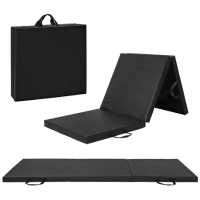
CAP Barbell Folding Exercise Mat
A thick, foldable exercise mat designed for home workouts, stretching, aerobics, gymnastics, and strength exercises. Its 2-inch high-density foam provides a generously padded surface for floor-based movements during a bodyweight workout.
- 2-inch high-density foam padding
- 72 x 24-inch workout surface
- Foldable design with carrying handles
- Hook-and-loop sides for connecting multiple mats
- Anti-tear construction for regular home workouts
As an Amazon Associate, we may earn from qualifying purchases.
So, Are 1,000 Jumping Jacks Worth It?
For calorie burn alone, probably not for most people.
One thousand jumping jacks may burn a meaningful number of calories, but there are easier ways to build a balanced workout.
You could combine moderate cardio, strength training, walking, and shorter bursts of vigorous exercise instead.
That combination can train more aspects of fitness without requiring hundreds of repetitive jumps.
The psychological side matters too.
If your workout plan constantly feels like punishment, maintaining it becomes difficult. Fitness goals tend to work better when the routine can realistically become part of normal life. Setting achievable fitness goals for long-lasting results can be more productive than focusing on impressive daily repetition counts.
The Bottom Line
So, how many calories do jumping jacks burn?
For many adults, vigorous jumping jacks may burn roughly 8 to 16 calories per minute. Based on that broad estimate, 100 jumping jacks might burn around 15 to 25 calories, 500 could burn approximately 75 to 125 calories, and 1,000 might burn roughly 150 to 250 calories.
Your actual numbers can be different.
Body weight, pace, fitness level, exercise duration, movement quality, and rest periods all influence energy expenditure.
More importantly, you do not need to perform 1,000 jumping jacks to make the exercise worthwhile.
A few minutes can raise your heart rate. Several short sets can add movement to a busy day. Combined with strength training, walking, and other activities, jumping jacks can become a simple and surprisingly effective part of an overall fitness routine.
That is what I like most about them. There is almost no preparation involved. You do not need a machine, membership, complicated program, or even much space.
Sometimes fitness really can begin with something as simple as standing up and moving.
