

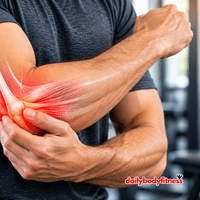
You finish a workout feeling accomplished, but later that evening, something doesn’t feel right. There’s an uncomfortable ache on the outside of your elbow.
The next morning, lifting your coffee mug, turning a doorknob, or gripping your phone suddenly feels more difficult than it should.
You haven’t played tennis in years. Maybe you’ve never played at all.
So why does your elbow hurt?
One possible explanation is tennis elbow, a common condition that can affect athletes, gym enthusiasts, manual workers, and anyone whose daily activities place repeated stress on the forearm tendons.
Despite its name, tennis elbow has surprisingly little to do with whether you actually play tennis. Understanding how it develops, recognizing its symptoms, and knowing how to approach recovery can help you make better decisions about your workouts and everyday activities.
What Is Tennis Elbow?
Tennis elbow, medically known as lateral epicondylitis, is a condition involving the tendons that attach the forearm muscles to the outside of the elbow.
These tendons help control wrist and finger movements. They also contribute to the stability and strength needed when gripping objects, lifting weights, or performing repetitive hand movements.
The condition is commonly associated with overuse, particularly when the tendons experience more physical stress than they can comfortably tolerate.
Although the medical name includes the term “epicondylitis,” which suggests inflammation, persistent tennis elbow often involves changes within the tendon itself. For this reason, healthcare professionals may also describe the condition as lateral elbow tendinopathy.
The distinction matters because managing tennis elbow is not simply about reducing inflammation. Restoring the tendon’s ability to tolerate physical activity is an important part of long-term recovery.
Why Is It Called Tennis Elbow?
The name comes from the association between this condition and repetitive movements involved in tennis, particularly the backhand stroke.
During a backhand, the forearm muscles help stabilize the wrist while the racket makes contact with the ball. Repeating this movement can place considerable stress on the tendons near the outside of the elbow.
However, similar stress occurs during many activities that have nothing to do with tennis.
Someone who regularly lifts heavy dumbbells, uses hand tools, plays pickleball, or performs repetitive gripping movements may develop the same condition.
Tennis elbow is therefore better understood as a tendon-related overuse condition rather than an injury exclusive to tennis players.
What Does Tennis Elbow Feel Like?
The most recognizable symptom of tennis elbow is pain or tenderness around the outside of the elbow.
The discomfort may begin gradually and become more noticeable during activities involving the wrist, hand, or forearm.
Common symptoms include:
- Pain on the outside of the elbow.
- Tenderness when touching the bony area near the elbow.
- Discomfort extending into the forearm.
- Pain when gripping objects or shaking hands.
- Difficulty lifting a coffee mug, grocery bag, or dumbbell.
- Pain when twisting a doorknob or opening a jar.
- Reduced grip strength because gripping becomes painful.
Some people notice discomfort only during demanding activities. Others experience symptoms during ordinary tasks that previously required little effort.
The pain may also become more noticeable after a workout or during the following morning.
Is Tennis Elbow the Same as Ordinary Muscle Soreness?
Not necessarily.
Ordinary post-workout muscle soreness, commonly called delayed onset muscle soreness or DOMS, usually develops after unfamiliar or demanding exercise. It tends to affect the exercised muscles and gradually improves over the following days.
Tennis elbow typically produces more localized discomfort around the outside of the elbow, especially during gripping or wrist movements.
The distinction is important because not every painful sensation following exercise represents productive training stress. Understanding whether muscle soreness means your workout was effective is part of learning to recognize the difference between normal training responses and symptoms that deserve closer attention.
Persistent elbow pain should not automatically be dismissed as a sign that your workout was challenging enough.
What Causes Tennis Elbow?
Tennis elbow commonly develops when repeated physical demands exceed the capacity of the affected tendons.
Tendons are strong connective tissues that attach muscles to bones. They help transfer muscular force during movement.
Like muscles, tendons respond to physical loading. However, their ability to tolerate increasing demands depends on factors such as training history, activity intensity, repetition, and recovery.
When someone suddenly increases the amount of gripping, lifting, or repetitive wrist movement they perform, the tendons may struggle to accommodate the additional workload.
This can contribute to the development of tennis elbow.
1. Repetitive Gripping
Gripping requires coordinated activity from several forearm muscles.
Holding a heavy dumbbell, carrying grocery bags, or repeatedly squeezing a tool can place stress on the tendons around the elbow.
The problem is not necessarily gripping itself. It is the combination of force, repetition, and insufficient recovery.
2. Sudden Increases in Training Volume
Imagine someone who normally plays pickleball once a week suddenly joining a tournament and playing several matches over two consecutive days.
Their muscles and tendons are now experiencing considerably more work than usual.
A similar situation can occur when a gym beginner rapidly increases training frequency or an experienced lifter adds too many demanding exercises to an existing routine.
The body may not have sufficient time to adapt to the increased workload.
3. Repetitive Wrist Movements
Activities involving repeated wrist extension or forearm rotation may contribute to symptoms.
Examples include using a screwdriver, painting, gardening, working with certain hand tools, and playing musical instruments.
Prolonged computer work may also aggravate symptoms in some people, particularly when combined with uncomfortable positioning, sustained muscle tension, or other repetitive activities.
4. Inadequate Recovery
Recovery allows the body to adapt to physical demands.
When demanding activities are repeated without sufficient recovery, symptoms may gradually become more noticeable.
Sleep, training frequency, workload, and overall physical conditioning can all influence how well someone tolerates exercise.
However, tennis elbow should not automatically be interpreted as proof that someone is overtraining. It can occur even in people with otherwise reasonable exercise routines.
Can Weightlifting Cause Tennis Elbow?
Yes. Tennis elbow can develop or become aggravated during weightlifting, particularly when exercises place substantial demands on the forearm muscles and grip.
Some gym exercises may be more uncomfortable than others, depending on the individual.
Dumbbell Curls
Biceps curls require the hands and forearms to stabilize the weight throughout the movement.
Heavy dumbbells, high repetition counts, and uncomfortable wrist positioning may increase symptoms in someone with an irritated elbow.
Pull-Ups and Rows
Pulling exercises require sustained gripping while the arms generate force.
Someone experiencing tennis elbow may notice discomfort when holding a pull-up bar or performing heavy rows.
Deadlifts
Deadlifts can place substantial demands on grip strength, particularly as the weight increases.
Although the primary movement involves the hips and legs, the forearm muscles must work to maintain control of the bar.
Push-Ups
Push-ups place weight through the hands, wrists, and upper limbs.
While tennis elbow is not the only possible explanation for discomfort during push-ups, some people may experience symptoms when supporting their body weight.
Wrist positioning, exercise intensity, and individual movement limitations can influence comfort.
Difficulty performing push-ups can also involve factors unrelated to elbow tendons, including upper-body strength, core stability, and technique. These are among the common reasons people struggle to perform push-ups properly.
The important point is that a particular exercise is not inherently responsible for tennis elbow in everyone. The relationship between the exercise, the person’s current condition, and their overall training workload matters.
Can You Still Work Out With Tennis Elbow?
Developing tennis elbow does not necessarily mean giving up exercise completely.
However, continuing to perform activities that repeatedly aggravate symptoms may delay recovery.
The more useful approach is to distinguish between activities that place excessive stress on the affected tendon and those that can be performed comfortably.
For example, someone experiencing pain during heavy dumbbell curls may still tolerate walking, stationary cycling, or certain lower-body exercises.
A person who cannot comfortably grip a heavy barbell may be able to maintain cardiovascular fitness through activities that place minimal demands on the affected arm.
The goal is to maintain an active lifestyle while giving the irritated tendon an opportunity to recover.
Exercises That May Need Temporary Modification
Depending on symptom severity, a person may need to reduce or temporarily avoid:
- Heavy pulling exercises.
- High-volume gripping activities.
- Heavy dumbbell curls.
- Pull-ups that reproduce elbow pain.
- Exercises requiring prolonged wrist extension.
- Repetitive racket strokes that aggravate symptoms.
This does not mean these movements must be permanently eliminated.
Instead, they may need to be reintroduced gradually as symptoms improve and the affected tissues become better able to tolerate loading.
What About Training Through Pain?
Pain should not be treated as a challenge to overcome through determination alone.
Some rehabilitation programs allow mild, manageable discomfort during carefully controlled exercises. However, this is different from forcing yourself through severe pain or continuing an activity that produces progressively worsening symptoms.
A physical therapist can help determine an appropriate level of exercise based on individual symptoms and functional limitations.
If an exercise produces sharp pain, substantially worsens symptoms, or leaves the elbow noticeably more painful afterward, reducing the intensity or stopping the activity is sensible.
How to Recover From Tennis Elbow
Recovery usually involves a combination of activity modification, symptom management, and gradual strengthening.
There is no single treatment that works equally well for everyone.
The most appropriate approach depends on how long symptoms have been present, their severity, the activities involved, and whether another condition may be contributing to the pain.
1. Reduce Activities That Aggravate Symptoms
One of the first steps is identifying the movements that consistently produce discomfort.
For a gym enthusiast, this might mean temporarily reducing heavy pulling exercises.
For a pickleball player, it could involve shorter playing sessions or taking a break from particularly demanding matches.
For someone performing repetitive manual work, modifying how tools are used or introducing regular breaks may help.
The objective is relative rest, which means reducing excessive stress while maintaining comfortable movement.
2. Use Ice or Heat for Symptom Relief
Cold packs may help reduce discomfort, particularly after an activity that aggravates the elbow.
A cold pack wrapped in a towel can be applied for approximately 10 to 20 minutes at a time.
Heat may feel more comfortable for some people experiencing stiffness or persistent muscular tension.
Neither approach should be considered a complete treatment for the underlying tendon problem.
Ice and heat primarily help manage symptoms rather than restore tendon strength.
3. Consider an Elbow Brace
A counterforce elbow strap is sometimes used to reduce discomfort during activities involving gripping or forearm movement.
The strap is generally positioned around the forearm below the elbow rather than directly over the painful bony area.
Some people experience temporary relief, while others notice little benefit.
A brace may be useful as part of a broader recovery plan, but it does not replace appropriate exercise rehabilitation or workload management.
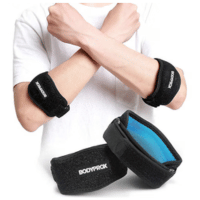
Bodyprox Elbow Brace 2 Pack
An adjustable forearm support designed to provide targeted compression during everyday activities and recreational sports.
- Compression gel pad helps relieve forearm stress and discomfort.
- Includes two adjustable braces with Velcro straps.
- Lightweight, breathable materials for comfortable wear.
- Suitable for tennis, golf, pickleball, and other repetitive arm activities.
- Compact design for everyday forearm support.
Check current price and availability on Amazon.
As an Amazon Associate, I earn from qualifying purchases. This product may help manage discomfort, but it is not a substitute for medical assessment or rehabilitation.
4. Gradually Rebuild Forearm Strength
Strengthening exercises are an important component of many tennis elbow rehabilitation programs.
The purpose is to progressively improve the ability of the forearm muscles and tendons to tolerate physical stress.
Rather than immediately returning to heavy lifting, rehabilitation generally begins with manageable movements and progresses according to symptoms and functional improvement.
Exercises That May Help Tennis Elbow Recovery
The following exercises are commonly included in rehabilitation programs. They are educational examples, not a personalized treatment plan.
Anyone with persistent symptoms, significant pain, or uncertainty about their diagnosis should consult a qualified healthcare professional before beginning rehabilitation.
Wrist Extension Strengthening
This exercise targets the muscles involved in extending the wrist.
Sit beside a table with your forearm supported and your palm facing downward. Allow your hand to extend slightly beyond the edge.
Using a very light dumbbell or another manageable weight, slowly raise the back of your hand toward the ceiling.
Lower the weight in a controlled manner.
The movement should remain comfortable and controlled.
A physical therapist can recommend an appropriate resistance level, repetition range, and progression based on your symptoms.
Isometric Wrist Extension
Isometric exercises involve producing muscular force without substantial joint movement.
Rest your forearm on a table with your palm facing downward.
Place your opposite hand over the back of the affected hand.
Gently attempt to lift the affected wrist while the opposite hand provides enough resistance to prevent movement.
The contraction should be controlled rather than maximal.
Isometric exercises may be useful during certain stages of rehabilitation, although they are not a guaranteed source of immediate pain relief.
Gentle Wrist Extensor Stretch
Extend the affected arm in front of you with the elbow straight and the palm facing downward.
Using your opposite hand, gently guide the wrist downward until you feel a comfortable stretch along the forearm.
Avoid forcing the movement or pushing into sharp pain.
Stretching may help maintain comfortable movement, but strengthening and workload management remain important components of recovery.
Why Progressive Loading Matters
A tendon that has become sensitive to physical stress may not immediately tolerate the same workload it handled before symptoms developed.
Gradually increasing resistance, repetitions, or activity duration gives the rehabilitation process a more structured approach.
The American Academy of Orthopaedic Surgeons provides a therapeutic exercise program for tennis elbow that emphasizes stretching, strengthening, and improving resistance to repetitive stress.
Rehabilitation should progress according to individual tolerance rather than a rigid expectation that everyone will recover at the same speed.
How Long Does Tennis Elbow Take to Heal?
One of the most frustrating aspects of tennis elbow is that recovery can be slower than expected.
Some people experience noticeable improvement within several weeks after modifying aggravating activities.
Others require several months of consistent rehabilitation before returning comfortably to their usual routines.
Persistent cases can last considerably longer, sometimes exceeding a year.
Recovery time depends on several factors, including:
- How long symptoms have been present.
- The severity of the condition.
- The demands of work and recreational activities.
- Whether aggravating activities can be modified.
- Adherence to an appropriate rehabilitation program.
- The presence of other contributing conditions.
A person who has experienced mild discomfort for a short period may have a different recovery experience from someone who has continued heavy lifting through worsening symptoms for several months.
It is also important to understand that pain does not always disappear in a perfectly predictable pattern.
Someone may experience improvement for several days, followed by temporary discomfort after increasing their activity.
This does not automatically mean rehabilitation has failed. However, repeated symptom flare-ups may indicate that the current workload needs adjustment.
Can Tennis Elbow Go Away Without Treatment?
Many cases improve without surgery or invasive procedures.
Reducing aggravating activities and gradually restoring strength can help support recovery.
However, simply waiting for pain to disappear while continuing the same activities that repeatedly trigger symptoms may not be sufficient.
Some people also become less active because they fear worsening the condition.
Prolonged avoidance of all movement can contribute to reduced strength and physical conditioning.
A balanced recovery plan aims to reduce excessive stress while gradually restoring the ability to perform normal activities.
What About Medication and Steroid Injections?
Over-the-counter pain medications or anti-inflammatory treatments may provide temporary symptom relief for some individuals.
However, medication suitability depends on personal medical history, other medications, and potential side effects.
A healthcare professional or pharmacist can help determine whether a particular medication is appropriate.
Corticosteroid injections are sometimes discussed for persistent tennis elbow.
Although these injections may provide short-term pain relief, research has raised concerns about recurrence and less favorable longer-term outcomes in some patients.
They should not be viewed as a guaranteed solution or a substitute for rehabilitation.
Surgery is generally reserved for selected cases involving persistent symptoms that have not responded adequately to appropriate nonsurgical management.
How to Prevent Tennis Elbow From Coming Back
Preventing recurrence involves understanding how your elbow responds to physical demands.
There is no way to guarantee that tennis elbow will never return, but several practical habits may help reduce unnecessary tendon stress.
Increase Training Gradually
Avoid making sudden increases in weight, repetitions, or training frequency.
If you are returning to the gym after several weeks away, consider rebuilding your previous workload progressively rather than immediately attempting your heaviest lifts.
Pay Attention to Grip and Wrist Position
During weightlifting, try to maintain a comfortable and controlled wrist position.
Avoid unnecessary gripping tension when the activity does not require maximal force.
For racket sports, technique and equipment may influence how forces are transmitted through the arm.
A qualified coach may help identify movement patterns that contribute to discomfort.
Strengthen Your Forearms
Forearm conditioning can be a useful addition to a balanced strength-training routine.
However, strengthening should be introduced progressively, particularly if you have previously experienced tennis elbow.
Allow Adequate Recovery
Avoid repeatedly increasing physical demands without considering recovery.
If your elbow becomes increasingly uncomfortable during consecutive training sessions, reassessing your routine may be more productive than continuing to increase intensity.
Recognize Early Symptoms
A mild ache that consistently returns during the same activity deserves attention.
Making an early adjustment may be easier than managing symptoms after they begin interfering with everyday tasks.
When Should You See a Doctor or Physical Therapist?
Not every case of elbow pain is tennis elbow.
Other conditions, including nerve irritation, joint problems, ligament injuries, and different tendon disorders, may produce overlapping symptoms.
Consider professional assessment if:
- Elbow pain persists despite reducing aggravating activities.
- Symptoms interfere with work, sleep, or ordinary daily tasks.
- Grip strength becomes noticeably limited.
- Pain continues to worsen.
- You are uncertain whether the symptoms are caused by tennis elbow.
- You need guidance on returning to weightlifting or sports.
Seek prompt medical attention for severe pain following an injury, significant swelling or deformity, numbness, substantial weakness, or an elbow that becomes red and hot, particularly when accompanied by fever.
A sudden snapping sensation during heavy lifting followed by marked pain or weakness also warrants prompt assessment.
A physical therapist can evaluate movement, strength, and activity tolerance while helping develop an individualized rehabilitation plan.
Frequently Asked Questions About Tennis Elbow
Can you get tennis elbow without playing tennis?
Yes. Tennis elbow can affect anyone whose activities place repeated stress on the forearm tendons. Weightlifting, pickleball, manual work, and repetitive gripping activities are among the possible contributing factors.
Is tennis elbow permanent?
Tennis elbow is not necessarily permanent. Many people recover with appropriate activity modification and rehabilitation. However, persistent cases may require several months or longer to improve.
Should I stop lifting weights if I have tennis elbow?
Not necessarily. Some exercises may need to be modified or temporarily avoided, particularly if they consistently aggravate symptoms. Other activities may remain comfortable. A healthcare professional can help determine an appropriate training approach.
Is tennis elbow the same as golfer’s elbow?
No. Tennis elbow primarily affects the tendons around the outside of the elbow. Golfer’s elbow, also called medial epicondylitis, affects the inner side of the elbow.
Despite their names, neither condition is exclusive to the sport associated with it.
Can pickleball cause tennis elbow?
Yes. Pickleball involves repetitive gripping, wrist stabilization, and racket movements that may contribute to tennis elbow, particularly when playing frequency or intensity increases suddenly.
Does wearing an elbow brace cure tennis elbow?
An elbow brace may reduce discomfort during certain activities, but it does not directly restore tendon strength or eliminate the underlying causes of excessive loading.
Can I return to tennis or pickleball after recovering?
Many people can return to racket sports after recovery.
A gradual return that considers playing duration, intensity, technique, and symptom response is generally more appropriate than immediately resuming the previous workload.
Final Thoughts: Tennis Elbow Is About More Than Tennis
Tennis elbow is a reminder that even relatively small areas of the body can have a significant influence on physical performance.
The forearm tendons help us perform countless everyday movements, from carrying groceries and opening jars to lifting weights and playing sports.
When those tendons become painful, the effects can extend well beyond the gym or tennis court.
The encouraging part is that tennis elbow often improves with appropriate management.
Recognizing symptoms early, adjusting aggravating activities, and gradually rebuilding strength can help support recovery while allowing many people to maintain an active lifestyle.
The objective is not simply to eliminate discomfort as quickly as possible. It is to restore the ability to move, exercise, and perform everyday activities with confidence.
Medical disclaimer: This article is intended for general educational purposes and does not replace professional medical advice, diagnosis, or treatment. Consult a qualified healthcare professional if you experience persistent elbow pain or are uncertain about the cause of your symptoms.
Medical References
- American Academy of Orthopaedic Surgeons. Tennis Elbow (Lateral Epicondylitis). https://orthoinfo.aaos.org/en/diseases–conditions/tennis-elbow-lateral-epicondylitis/
- American Academy of Orthopaedic Surgeons. Therapeutic Exercise Program for Epicondylitis. https://orthoinfo.aaos.org/en/recovery/epicondylitis-therapeutic-exercise-program/
- National Health Service. Tennis Elbow. https://www.nhs.uk/conditions/tennis-elbow/
- NHS Inform. Tennis Elbow. https://www.nhsinform.scot/illnesses-and-conditions/muscle-bone-and-joints/arm-shoulder-and-hand-problems-and-conditions/tennis-elbow/
