

Good posture is one of those things most people only think about when something starts to hurt. Neck stiffness after a long workday, lower back pain when standing up, or that constant feeling of tight shoulders are often signs that posture has slowly slipped out of balance. The good news is that posture is not fixed. You can improve it with the right exercises, consistency, and a better understanding of how your body moves.
Let’s go through some realistic ways on how to improve posture with exercise. No fancy equipment, no extreme routines, and no unrealistic promises. Just smart movement, simple habits, and exercises that actually work.
Why Posture Matters More Than You Think
Posture affects far more than how you look. It influences how your muscles work, how you breathe, how your joints age, and even how energized you feel during the day. Poor posture can lead to muscle imbalances where some muscles become tight and overworked while others weaken and switch off.
Common posture-related issues include rounded shoulders, forward head posture, excessive lower back arching, and stiff hips. Over time, these patterns can increase strain on the spine and joints, making everyday activities feel harder than they should.
Improving posture through exercise helps restore balance. It trains your body to support itself more efficiently, reducing unnecessary tension and improving overall movement quality.
What Causes Poor Posture in Daily Life
Modern routines quietly encourage poor posture. Long hours of sitting, staring at screens, driving, and even standing incorrectly all contribute. Many people also lack regular movement variety, repeating the same positions day after day.
Another overlooked factor is weak postural muscles. Your body naturally slouches when it lacks the strength to stay upright. This is why posture correction is not just about reminders to sit up straight. It requires building strength, mobility, and awareness.
How to Improve Posture With Exercise Effectively
The most effective posture improvement exercises focus on three key areas: mobility, strength, and control. Stretching tight muscles without strengthening weak ones creates temporary relief but not lasting change. Likewise, strengthening without restoring mobility limits progress.
A balanced posture exercise routine addresses all three.
Best Exercises to Improve Posture Naturally
Below are practical exercises that target the most common posture problem areas. These movements work well for beginners and can be progressed over time.
Chin Tucks for Forward Head Posture
Chin tucks strengthen deep neck muscles that help keep your head aligned over your shoulders.
How to do it:
- Sit or stand tall with your chest relaxed
- Gently draw your chin straight back as if making a double chin
- Hold for five seconds and release
- Repeat ten times
This is one of the best exercises for forward head posture and is easy to do throughout the day.
Wall Angels for Upper Back Alignment
Wall angels improve shoulder mobility and strengthen the upper back muscles responsible for keeping your shoulders back.
How to do it:
- Stand with your back against a wall, feet a few inches forward
- Press your lower back, upper back, and head gently into the wall
- Raise your arms into a goalpost position
- Slowly slide your arms up and down while maintaining contact with the wall
Perform two to three sets of eight to ten reps.
Resistance Band Pull-Aparts
This exercise strengthens the rear shoulders and upper back, which are often weak in people with rounded shoulders.
How to do it:
- Hold a resistance band with arms extended in front of you
- Pull the band apart by squeezing your shoulder blades together
- Control the return
Aim for three sets of twelve to fifteen reps. This is a great addition to any posture correction workout at home.
Planks for Core Posture Support
Your core plays a major role in posture. A weak core makes it harder to maintain proper alignment.
How to do it:
- Place forearms on the floor with elbows under shoulders
- Keep your body in a straight line from head to heels
- Brace your core and breathe normally
Hold for twenty to forty seconds. Focus on quality over duration.
Glute Bridges for Pelvic Alignment
Weak glutes often contribute to lower back strain and poor standing posture.
How to do it:
- Lie on your back with knees bent and feet flat
- Press through your heels and lift your hips
- Squeeze your glutes at the top
Perform three sets of ten to fifteen reps.
While exercises are the foundation for better posture, some people find it helpful to use light external support during daily activities to reinforce proper alignment.
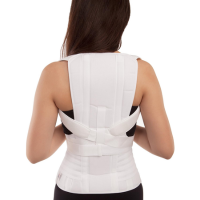
GABRIALLA Mid and Lower Back Posture Corrector for Women (TLSO-250) – Large
Support your posture training with gentle thoracic + lower back support that does not lock you up.
- Mid + lower back support for the thoracic and lumbo-sacral spine
- Easy to use straps plus two flexible metal stays
- Breathable + comfortable elastic abdomen with plush cotton lining
- Women-specific fit engineered to contour to an hourglass shape
As an Amazon Associate, this site may earn from qualifying purchases.
Daily Stretching Exercises for Better Posture
Stretching helps release muscles that pull your body out of alignment. These stretches work best when paired with strengthening exercises.
Chest Stretch for Rounded Shoulders
Tight chest muscles pull the shoulders forward.
How to do it:
- Stand in a doorway
- Place forearms on the door frame
- Step forward gently until you feel a stretch across the chest
Hold for twenty to thirty seconds.
Hip Flexor Stretch for Sitting-Related Tightness
Prolonged sitting shortens the hip flexors, affecting pelvic posture.
How to do it:
- Kneel on one knee
- Gently shift hips forward while keeping your torso upright
- Feel the stretch in the front of the hip
Hold for thirty seconds on each side.
Upper Trapezius Neck Stretch
This stretch helps relieve neck tension caused by poor posture.
How to do it:
- Sit tall
- Gently tilt your head to one side
- Use your hand to add light pressure
Hold for twenty seconds per side.
How Often Should You Do Posture Exercises
Consistency matters more than intensity. Short daily sessions often produce better results than long workouts done once a week. Many posture improvement exercises can be done in ten to fifteen minutes.
A realistic schedule could include:
- Daily mobility and stretching
- Strength exercises three to four times per week
- Posture awareness during daily activities
This approach works well for people looking for how to improve posture with exercise without spending hours training.
Posture Exercises You Can Do at Work
You do not need a gym to fix posture. Simple movements throughout the day make a big difference.
Seated posture exercises include:
- Seated chin tucks
- Shoulder blade squeezes
- Seated spinal extensions
Standing posture exercises include:
- Standing glute squeezes
- Wall posture checks
Doing these periodically reduces stiffness and reinforces good alignment.
Common Mistakes When Trying to Fix Posture
One common mistake is forcing perfect posture all day. Holding yourself rigid creates tension and fatigue. Good posture should feel natural, not strained.
Another mistake is ignoring breathing. Shallow chest breathing reinforces upper body tension. Practicing deep breathing while maintaining relaxed alignment supports posture improvement.
Finally, many people stop exercises too soon. Posture changes gradually. Most people notice subtle improvements in a few weeks, with more visible changes over several months.
How Long Does It Take to See Results
Results vary depending on starting posture, consistency, and daily habits. Some people feel relief from pain within two to three weeks. Visible posture changes typically appear after consistent practice for several months.
The key is patience and persistence. Posture is a habit built over time, not a quick fix.
Combining Exercise With Better Daily Habits
Exercise works best when paired with simple habit changes.
Helpful habits include:
- Adjusting screen height to eye level
- Taking movement breaks every thirty to sixty minutes
- Using supportive seating when possible
- Sleeping in positions that support spinal alignment
These changes reinforce the benefits of posture exercises.
Beginner Posture Workout Example
Here is a simple posture workout you can follow three times per week:
- Chin tucks: ten reps
- Wall angels: ten reps
- Resistance band pull-aparts: fifteen reps
- Glute bridges: fifteen reps
- Plank hold: thirty seconds
Finish with chest and hip flexor stretches.
This routine is effective for beginners searching for posture improvement exercises at home.
Staying Motivated With Posture Training
Posture training can feel boring if you expect instant transformation. Instead, focus on how your body feels. Reduced tension, easier breathing, and less pain are meaningful wins.
Tracking small improvements, such as sitting comfortably longer or feeling less neck strain, helps maintain motivation.
Final Thoughts on Improving Posture With Exercise
Learning how to improve posture with exercise is about consistency, awareness, and realistic expectations. You do not need extreme workouts or expensive tools. Simple exercises done regularly can reshape how your body moves and feels.
Start small, stay patient, and let good posture become a natural result of stronger, more balanced movement. Over time, your body will thank you for the effort.
